



The Magazine

The Magazine
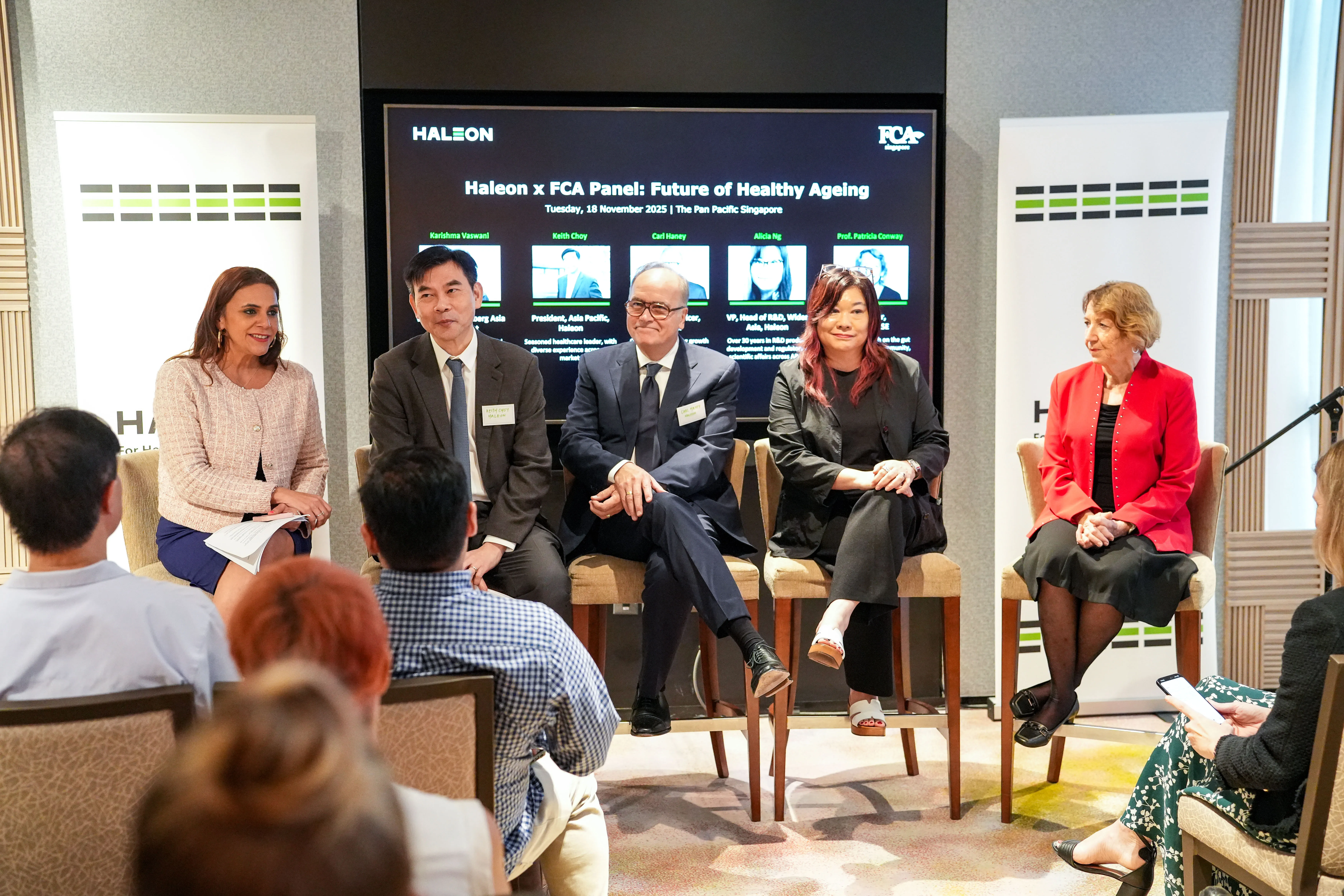
Carl: By 2050, one in four people in Asia will be over 60. So, it’s time to shift focus from increasing life span to enhancing health span - helping people to not only live longer, but to live well. As a specialist in better everyday health, we’re focused on self-care solutions which support healthy ageing, leveraging AI for early diagnosis and partnering with governments and NGOs to boost health literacy.
Keith: Let’s look at three key trends. First - there’s a large treatment gap across many conditions. Take oral health, where 3 in 5 people in India suffer sensitivity or gum problems, yet only 5% treat. We’re bridging this gap through greater access to superior brands like Sensodyne and bringing treatment to smaller towns through dental vans. Second – in markets like China and Korea, consumers want more personalised solutions.
Our Centrum Daily Wellness Packs deliver tailored multivitamins according to age, gender and lifestyle. Finally – for cost-conscious consumers in emerging markets, we’ve launched smaller, affordable packs for Sensodyne and Centrum in India, the Philippines and Indonesia.
Carl: We always start with what matters most to consumers – oral, bone, nutrition, cognitive and metabolic health. Diabetes, for example, affects nearly 540 million people globally and is linked to gum disease, so we recently launched our parodontax gum health brand in China, tailored to local preferences. Osteoporosis is another focus due to the lack of dairy in local diets. Our latest innovations for our Caltrate calcium supplement range – a Vitamin K2 formulation in South-East Asia and a liquid format in China – are designed to boost calcium absorption. This is all part of our approach of developing new products using trusted ingredients and backed by science.
Keith: Healthcare availability is more limited in the emerging markets, so we’re increasing access to our products through smaller, more affordable pack sizes – like our smaller Sensodyne Cavity and Actifed cough syrup products in Indonesia. We’re also raising health literacy amongst hard-to-reach consumers through programmes like ‘Polident Smiles Can’t Wait’ in the Philippines, Thailand and Indonesia which provides oral health education and access to dentures.
Carl: Absolutely critical - successful innovation requires an ecosystem of partners working together across industry, academia and government. Beyond our labs, we co-create with leading institutions. We’ve recently partnered with the Singapore Centre for Environmental Life Sciences and PC Biome to advance microbiome research – paving the way for the next-generation of consumer healthcare solutions.
Keith: We partner with governments across Asia to boost health literacy. Take China, where we’ve worked with the government for more than ten years on our Caltrate bone health programme which has reached 55 million consumers and delivered 4.5 million bone density tests. Working with the health and beauty retailer AS Watson, we’ve created dedicated in-store zones which educate people aged 50+ on nutrition and bone health. We also partner with the healthcare professionals who recommend our brands, such as working with the Indian Dental Association to roll out our Sensodyne dental vans.
Carl: AI helps us to innovate faster, while making self-care smarter and more scalable. In China, we’ve launched five AI-powered self-test apps for pain, posture, cognition and oral health, all accessible via mobile. We’re also using AI to discover plant-based molecules for gut health and immunity and speed up product development for brands like Centrum and Panadol.
Keith: Comprising around 60% of the world’s population, Asia is critical to our ambition of reaching 1bn more consumers by 2030. We’re focused on bringing innovative products to market, strengthening local supply chains, and building research partnerships to deliver meaningful health benefits across the region.
Related